

1988 C4 Wheel size ? calibrated for the speedo
 12-05-2012, 05:52 PM
#1
Drifting

Thread Starter

 1988 C4 Wheel size ? calibrated for the speedo
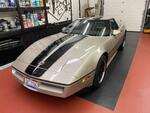
I know my car was sold with 16" wheels and I am pretty sure Chevy put 17" wheels before the production year was over. My question is how much if any difference is there running 17" wheels versus 16" wheels regarding the speedometer ?
 12-05-2012, 06:03 PM
#2
Team Owner




The 88 was the only year to offer two wheel sizes; the 16" diameter wheel was stock and the 17" wheel was optional. The OEM size tires (255/50-16 and the optional 275/40-17) were very close in diameter so there really wasn't a lot of difference in the speedo readout. And the two tires has very close to the same treadwidth.
12-05-2012, 06:12 PM
#3

yep...
the biggest difference was in the size of the hole in the middle of the tire...not the circumference of the outside diameter.
Think of it like this....the more extreme the easier it is to visualize.
a tire thats a given size, can have a rim of much different size and NOT change the distance traveled in 1 revolution. It can have a 5" rim or a 17" rim...as long as that outside stays about the same. Its so little, so minor that its not noticable. You have tread wear and that takes 1/4" off each side or radius, so about 1/2" of diameter is gone by the time the tire wears out but it has almost no effect on the speedo..
the biggest difference was in the size of the hole in the middle of the tire...not the circumference of the outside diameter.
Think of it like this....the more extreme the easier it is to visualize.
a tire thats a given size, can have a rim of much different size and NOT change the distance traveled in 1 revolution. It can have a 5" rim or a 17" rim...as long as that outside stays about the same. Its so little, so minor that its not noticable. You have tread wear and that takes 1/4" off each side or radius, so about 1/2" of diameter is gone by the time the tire wears out but it has almost no effect on the speedo..
12-05-2012, 06:39 PM
#4
Race Director




As noted, the wheel size really isn't what matters.
It is the overall diameter of the tire.
255/50-16 = approx. 26.04" in diameter
275/40-17 = approx. 25.66" in diameter
That is only 0.38" difference.
With the speedometer reading 60mph, you will really only be going 59.1mph with the 274/40-17 tires.
It is the overall diameter of the tire.
255/50-16 = approx. 26.04" in diameter
275/40-17 = approx. 25.66" in diameter
That is only 0.38" difference.
With the speedometer reading 60mph, you will really only be going 59.1mph with the 274/40-17 tires.
 12-05-2012, 10:30 PM
#6


The factory thought there was enough of a difference to install different speedo gears for 16" or 17" tires
Tire Ratio Drive gear Driven gear
P255/50ZR16 Tires 2.59 Red 17 Orange 35
P275/40ZR17 Tires 2.59 Red 17 White 36
P255/50ZR16 Tires 2.73 Red 17 Red 37
P275/40ZR17 Tires 2.73 Red 17 Blue 38
12-06-2012, 09:07 AM
#7
Team Owner
But according to that page, the 4+3 trans and 3.07 ratio got the same speedo gear (Green) regardless of the wheel/tire size.
And the table shows 16" wheels listed up through 1990
And the table shows 16" wheels listed up through 1990
12-06-2012, 09:31 AM
#8
Drifting

Member Since: Aug 2006
Location: Canandaigua New York
Posts: 1,624
Likes: 0
Received 1 Like
on
1 Post
Here is a calculator to help you determine tire/wheel size in relation to speed..
Just put in the old size on the left, and the new size on the right.. speed difference is below.
http://www.miata.net/garage/tirecalc.html
Just put in the old size on the left, and the new size on the right.. speed difference is below.
http://www.miata.net/garage/tirecalc.html
12-06-2012, 11:08 AM
#9

The "chart/table" is a compilation of the individual and there's no GM validation.
Here is a calculator to help you determine tire/wheel size in relation to speed..
Just put in the old size on the left, and the new size on the right.. speed difference is below.
http://www.miata.net/garage/tirecalc.html
Just put in the old size on the left, and the new size on the right.. speed difference is below.
http://www.miata.net/garage/tirecalc.html
Speedometer/odometer is done using a "rolling radius" - or a "rolling circumference".
OP - Your only concern is the tire dimensions. If you're using a "factory spec" tire size then you should be able to rely on the information in GM Charts. They need to be confirmed by you. If it's a "non-spec" tire size then to accurately do the math you need "rolling radius" or the "rolling circumference"!
rolling radius - center of rear axle to ground dimension
rolling circumference - chalk tire at 6 o'clock and mark floor "roll" 1 revolution back to 6 o'clock mark floor and measure.
Last edited by WVZR-1; 12-06-2012 at 11:22 AM.
 12-07-2012, 07:52 PM
#10
Drifting
Member Since: Aug 2006
Location: Canandaigua New York
Posts: 1,624
Likes: 0
Received 1 Like
on
1 Post
The GM engineering formula for odometer/speedometer calibration and the catalog applications through the years have had some "conflicts" - that's the first time that particular one has been mentioned that I've noticed. I believe I've got the formula (or so I've been told). It's likely that in the GM engineering formula when using the 3.07 ratio there was a marginal difference so one tire size or the other was rounded up or down. There's no way of confirming without "rolling radius" or "rolling circumference". The side wall support/stiffness may have effected those dimensions.
The "chart/table" is a compilation of the individual and there's no GM validation.
That calculator and "MOST" used advertised RPM & diameters. Neither of those are used when calibrating/calculating speedometer/odometer.
Speedometer/odometer is done using a "rolling radius" - or a "rolling circumference".
OP - Your only concern is the tire dimensions. If you're using a "factory spec" tire size then you should be able to rely on the information in GM Charts. They need to be confirmed by you. If it's a "non-spec" tire size then to accurately do the math you need "rolling radius" or the "rolling circumference"!
rolling radius - center of rear axle to ground dimension
rolling circumference - chalk tire at 6 o'clock and mark floor "roll" 1 revolution back to 6 o'clock mark floor and measure.
The "chart/table" is a compilation of the individual and there's no GM validation.
That calculator and "MOST" used advertised RPM & diameters. Neither of those are used when calibrating/calculating speedometer/odometer.
Speedometer/odometer is done using a "rolling radius" - or a "rolling circumference".
OP - Your only concern is the tire dimensions. If you're using a "factory spec" tire size then you should be able to rely on the information in GM Charts. They need to be confirmed by you. If it's a "non-spec" tire size then to accurately do the math you need "rolling radius" or the "rolling circumference"!
rolling radius - center of rear axle to ground dimension
rolling circumference - chalk tire at 6 o'clock and mark floor "roll" 1 revolution back to 6 o'clock mark floor and measure.
But most people aren't that picky.
I have yet to find a speedometer that is that accurate to begin with.
And the only 'speed detector' that counts, is the one being held by the cop as you drive by.
If your car is within a 'resonable' speed as you pass, that's all that counts on the street.
On the strip might be a different story, but for street, driving 1 or 2 miles per hour off won't make a bit of difference.

 12-08-2012, 08:09 AM
#12
Race Director
What is the tire size on your new 17" wheels?
Tire size is what matters, not wheel size.
If the tire on your new 17" wheel has the same overall diameter (and rolling circumference) as the tire on your old 16" wheel, your speedometer would be exactly the same.
 12-08-2012, 03:39 PM
#13
Le Mans Master


As noted, the wheel size really isn't what matters.
It is the overall diameter of the tire.
255/50-16 = approx. 26.04" in diameter
275/40-17 = approx. 25.66" in diameter
That is only 0.38" difference.
With the speedometer reading 60mph, you will really only be going 59.1mph with the 274/40-17 tires.
It is the overall diameter of the tire.
255/50-16 = approx. 26.04" in diameter
275/40-17 = approx. 25.66" in diameter
That is only 0.38" difference.
With the speedometer reading 60mph, you will really only be going 59.1mph with the 274/40-17 tires.
Starting in '93 the base 17" wheels used a 285/40/17 tire = 26.0" in diameter, so very close to the same size and almost no change in the speedometer
On my '88 with the base 16" wheels I went to 17" wheels with 275/40/17 and later 285/40/17 and they worked fine.
12-09-2012, 06:16 AM
#14
Melting Slicks